Test a founder community with one focused, low-stakes product question before committing. Judge the replies by whether they fit your context, explain their reasoning, get specific, and leave you with a useful next step—not by their warmth, confidence, or volume. One exchange can show how the community handled that question. It can’t prove what customers want or predict the community’s overall value.
What useful product feedback looks like
Useful feedback engages with the decision you described. It takes relevant details into account, explains why the responder sees the issue a certain way, and gives you something concrete to consider. The reply doesn’t have to agree with you. It should help you examine the decision more clearly.
Compare “Looks great—ship it!” with “I couldn’t tell whether the monthly plan was available until I reached the bottom of the page.” The first may be encouraging, but it gives you little to inspect. The second points to a specific part of the experience. It still doesn’t tell you what all prospective customers think, but it offers a clearer starting point for checking your page.
A reply can also be useful without prescribing a fix. It might ask a clarifying question, identify an assumption, or point out information missing from the question. By contrast, a confident opinion without a reason—“Everyone wants annual billing”—is hard to apply, even if it sounds decisive.
Communities don’t all serve the same purpose. Swisspreneur’s guide distinguishes social, support, advocacy, and insight communities; that’s a useful reminder to check whether a group’s purpose matches the kind of help you need. A founder community guide from Netwoorking AI also recommends defining whom a community serves and what problem it addresses. Neither label guarantees that a particular reply will be useful. That’s what the trial helps you observe.

Run a one-question feedback trial
Keep the trial narrow: you want to see how a community responds to one real decision, not ask its members to judge your entire company. You can also review public discussions before posting. GrowthMentor’s guide suggests scanning recent posts for founders asking real questions and getting real answers. Treat that as a preliminary clue, not a guarantee about the response you’ll receive.
Choose a decision you can safely share. Pick something bounded, such as whether a pricing page makes a plan clear or which onboarding step needs explanation. Leave out private customer information, passwords, confidential business details, and unreleased material you aren’t comfortable sharing.
Give the relevant context. In a few sentences, explain who the product is for, what the user is trying to do, and what part of the experience you’re reviewing. Include what you’ve already tried or what prompted the question, if you can share it. Don’t present a handful of comments as proof of a broad customer pattern.
Name the decision. Say what you’re deciding and what constraint matters. “I’m deciding whether to give the monthly plan equal prominence with the annual plan” gives members something concrete to respond to. “Any pricing advice?” leaves them to guess what you need.
Ask one bounded question. For example: “Given this page and audience, what would make the monthly option easier to find, and why?” One question makes it easier to see whether a reply addresses the issue rather than wandering into general startup advice.
Keep the request appropriate to the room. Check its posting rules and typical format. A public discussion board, a recurring peer group, and a direct feedback session may each invite different kinds of replies. Don’t treat silence as a poor-quality answer; no response is a separate observation.
Use a four-part check to assess the replies
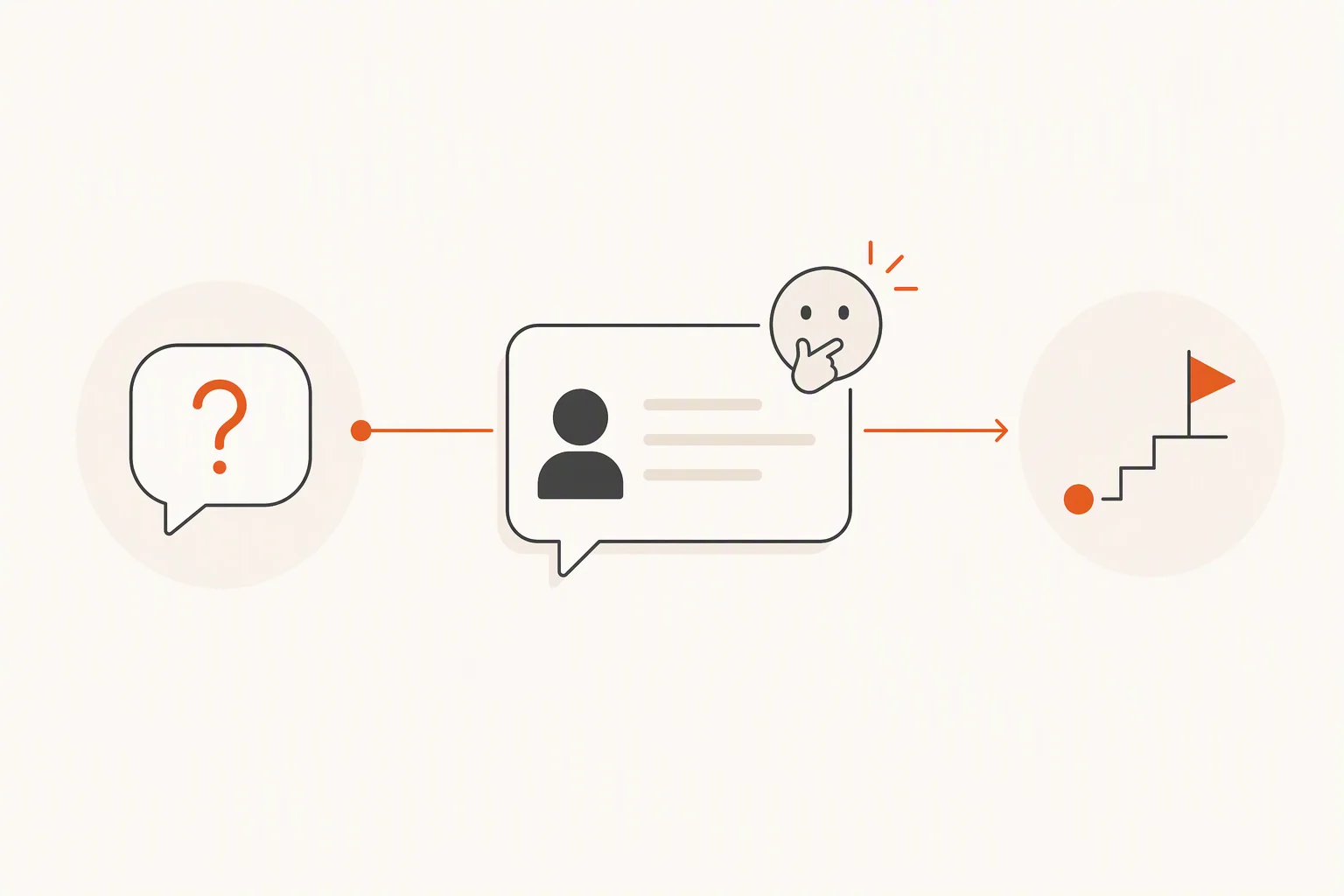
After the exchange, review the substance of each reply with four questions: Did it fit your context? Did it explain its reasoning? Was it specific? Did it point to a useful next step? This scorecard is an editorial reflection aid created for this article. It hasn’t been validated as a measurement tool, and it shouldn’t be used to rank communities.
Context fit: Does the reply take account of the audience, product, stage, or constraint you shared? Advice that assumes a large sales team may not fit a solo founder’s current situation.
Reasoning: Does the person explain why they recommend something, or offer only a conclusion? A clear reason gives you something to examine, even if you disagree.
Specificity: Does the reply identify a particular part of the product or user experience? “Make it clearer” is less actionable than “The annual price stands out, but the monthly price is below the plan description.”
Useful next step: Does it suggest a proportionate action, a follow-up question, or a way to check an assumption? A next step should help you investigate the decision—not require you to rebuild the product.
A hypothetical example: feedback on a pricing page
This example is hypothetical. It is not an observed community exchange or a research finding. Imagine a founder of a small SaaS product shares a pricing page and explains that prospective customers have asked whether monthly billing is available. The founder wants to decide whether to emphasize the annual plan or make both billing options equally visible.
Reply A: “Put annual first. Everyone wants to save money.” The reply takes a position, but it doesn’t refer to the questions the founder mentioned or explain where “everyone” comes from. It also leaves no practical way to check the advice. On the four-part check, context fit, reasoning, specificity, and next step are all weak.
Reply B: “Since prospects have asked about monthly billing, I wouldn’t hide that option. Keep both prices visible for now. Ask a few people who haven’t seen the page to find the monthly price and explain what they think each plan costs.” This reply uses the context, explains its recommendation, points to a specific page issue, and offers a small next step.
Reply B gives the founder more to work with, but it doesn’t prove that customers prefer monthly billing or that a page change will increase sales. It suggests a way to check whether people can find and interpret the information. The business decision still needs evidence appropriate to the founder’s audience and product.
A more careful reply might even challenge the premise: “Are those people asking because the price is hard to find, or because they want to know whether monthly billing exists?” That question could help the founder distinguish a page-clarity issue from a pricing-policy question. The scorecard makes that difference visible without assuming that any one reply is the answer.
What the trial can—and cannot—tell you
One focused exchange can show whether the responses you received were relevant and usable in that instance. It can help you decide whether to clarify your question, investigate a suggestion, or seek a different kind of input. It cannot establish the overall quality of a community, predict how quickly members will respond next time, or demonstrate customer demand.
That distinction matters because founder feedback and customer feedback aren’t interchangeable. Other founders may not be your target users. Their opinions can help you think through a decision, but they don’t establish what buyers understand, choose, or pay for.
Startup Club’s community guide recommends bringing one decision, what you’ve tried, and relevant evidence when asking a group for help. It also suggests reviewing whether the group helped with an action after a month. Those are practical prompts for making and reviewing a request—not evidence that one trial predicts long-term value.
A community can also be useful for learning, accountability, or relationships even if product critique isn’t its strongest feature. In one published founder account, Joseph Quan described interviewing members of existing professional networks while shaping a community for a specific audience. That’s an example of one founder’s process, not proof that community feedback generally improves products. First Round Review’s account provides that context.
If a group’s structure matters to your decision, consider that separately from response quality. A founder-community guide published by Helix recommends checking features such as member selection, meeting cadence, and evidence about the group. Those details may help you understand how the room works; they don’t replace observing whether a reply addresses your product question.
Decide what to do after the trial
Don’t let a total score make the decision for you. The four checks are there to help you remember what happened, not turn one thread into a league table. Look at the replies themselves: Did members understand the decision? Did they explain their advice? Did anything help you identify a reasonable next step?
When you write your question, a short template can help keep it focused: “I’m building [product] for [audience]. I’m deciding [specific decision]. I’ve tried [what you’ve tried]. Given that context, what would you consider next, and why?” Use only details you’re comfortable sharing, and leave out anything confidential.
If replies missed the context, check whether your post named the audience, constraint, and decision clearly enough. If not, revise the framing before concluding that the community is a poor fit.
If replies were relevant and reasoned, decide whether a suggested step is safe and worthwhile to explore. Compare it with what you know about your product and customers; don’t accept advice solely because it was delivered confidently.
If replies repeatedly address a different problem, the group may be better suited to another need, or its members may not have the context you need. Consider looking for a more relevant source of input.
If nobody replies, separate response rate from response quality. The post may have had little visibility, the timing may not fit the group’s cadence, or the question may need a different format. One unanswered post doesn’t resolve which explanation applies.
If the exchange helps, consider trying one more bounded question before making a larger commitment. The follow-up can show whether the first useful reply was an isolated contribution or whether the format suits the decisions you want help with.
Next step
Want to share your progress and connect with founders building in public? Start a free Buildside trial.
References
- Guide to Thriving in an Online Business Community 2025 - Swisspreneur
- Online Communities: Complete Guide for Founders
- 15 Best Startup Communities for Founders (2026) | GrowthMentor
- 5 Founder Communities for Solo Founders: Cost & Fit
- A Founder’s Step-by-Step Guide to Getting Your First 1,000 Community Members
- What Is a Founder Community, and How Do You Choose One?